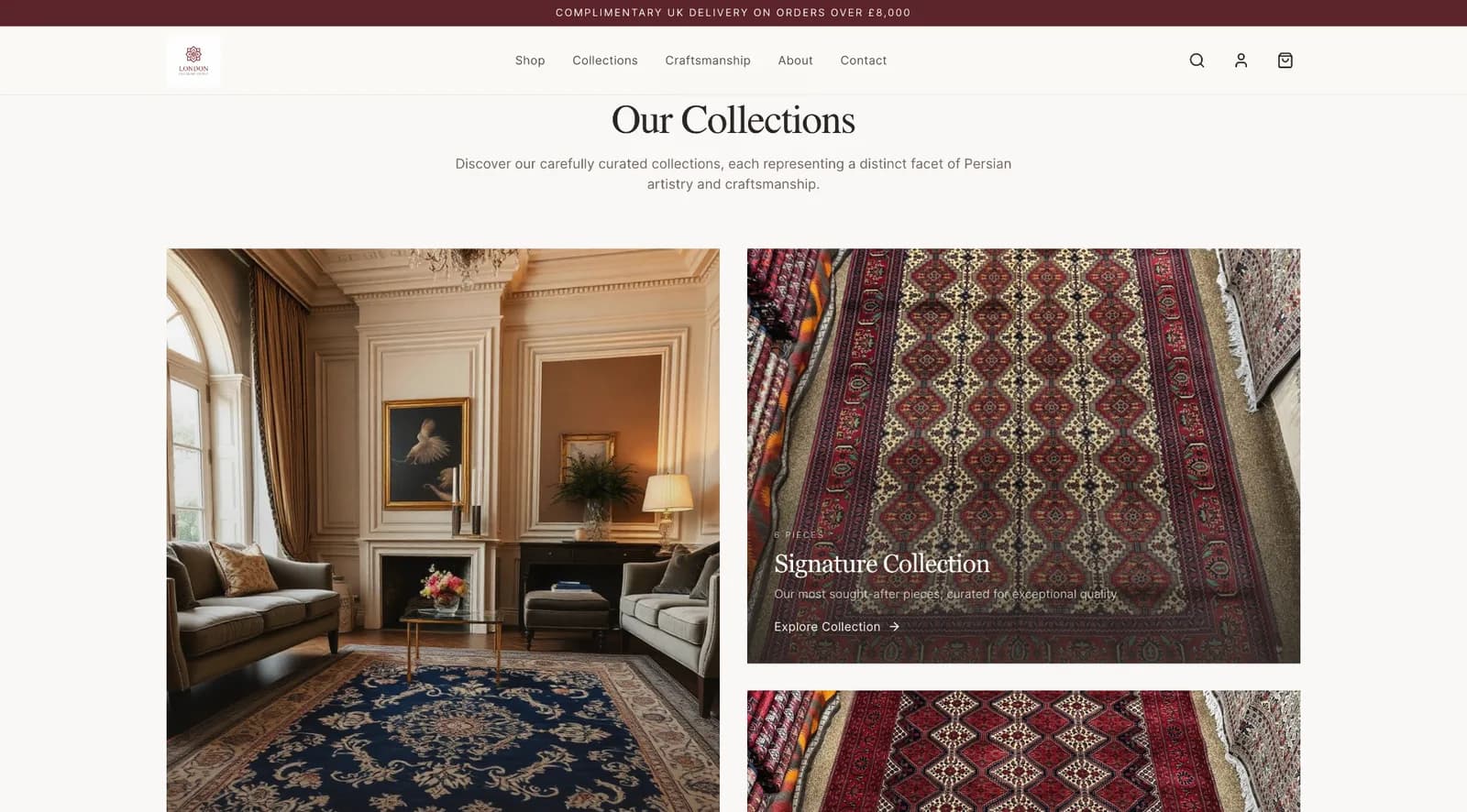
Flooring and rugs, London
London Flooring Group londonflooringgroup.com
A luxury showcase for a London flooring and rug house trading since 1985: Persian and Turkish rugs, engineered wood and bespoke fitting.
TitanStudio, a London web design studio working UK-wide, builds websites for plumbers and heating engineers: clear boiler, plumbing and installation pages, a call-out form that sorts urgent jobs from planned ones, and your registration shown plainly. Your site is live in 21 days from the day we have your content.
Book a call
Pick a time that suits you. We will confirm by text or email.
Next working days, UK time
30 minute slots
Prefer to talk now? +44 7337 522762

A broken boiler is searched for on a phone, usually in a hurry. A slow page or a hidden number sends the call to whoever answers first.
Anyone letting you near their boiler wants proof you are properly registered. A site that does not show your registration leaves them guessing.
A leaking tap, a new boiler and a full bathroom are different customers. One page called "Services" loses all three of them.
A burst pipe and a quote for a new heating system arrive in the same inbox with the same subject line. The urgent one waits while you read the rest.
A landlord with a leaking radiator, a family needing a boiler swap and a business with a burst pipe each look for their own case. Separate pages let them find it fast.
For boilers and gas appliances, people want to see that you are registered to work on gas. Show your registration number and where to check it, and keep the wording to what you hold.
Burst pipes and heating failures cannot wait, so people look for how you handle them. Say plainly what you offer out of hours and when you answer the phone.
They want a name, a face and a van they will recognise. A short about section with real photos of you and your team settles it.
They ask whether you survey first, whether a boiler quote is written and what is included. A short explanation of how a quote works answers it before they ring.
Plumbers travel, but not far. The areas and boroughs you cover are one of the first things checked, so list them by name and show jobs done there.
Fixed within reach on a phone, so a customer with water on the floor does not hunt for the number. Tracked, so you can see how many calls the site brings, and which pages brought them.
It asks whether the problem is urgent, what it is, where, and gives you a number to call back on. Urgent enquiries are marked as such in the alert you receive.
Boiler repair and installation, heating systems, bathrooms, leaks and burst pipes, drainage, landlord work. Each is explained on its own page for the people searching for it, in words they use.
Your gas registration, any other scheme you belong to and your insurance, set out in plain words with your registration number, so customers can check you. No scheme logos used without permission.
A page per town or borough, with jobs done there. People nearby see you work in their area, and local search has something real to read, not a list of town names.
Tidy pipework, a neat boiler install, a finished bathroom. Photographed properly and captioned, they say more about your standards than any slogan could, and they are yours.
A plumbing and heating website should treat a burst pipe and a boiler quote as two different visitors. The first is in a hurry and wants a phone number. The second wants to read.
Put the call button within reach of a thumb, and say plainly what you offer for urgent jobs and out of hours. We do not invent response times for you. Promise only what your diary can deliver, and if you do not take night calls, say so, because it saves everyone time.
Behind the button, the form should ask whether it is urgent, what is wrong and where. TitanStudio sets up the enquiry alerts so an urgent job is flagged as urgent when it reaches your phone. That is how a plumber and heating engineer website design earns its place: it sorts the work before you pick up.
A heating engineer should show registration as a plain fact that a customer can check, not as a badge. State what you are registered for, give your registration number and tell people where to verify it.
Gas work is regulated by law. The Gas Safety (Installation and Use) Regulations 1998 say that people carrying out work on gas fittings must be competent and, with limited exceptions, belong to a class approved by the Health and Safety Executive. Check the current rules and the register's own guidance for the exact wording before you publish a legal claim, and keep the page to what you personally hold.
The same goes for other schemes. Name them, say what they cover, and point people to the scheme's own directory. We never imply that a scheme endorses you, and we do not use scheme logos without permission.
A website for a plumber or heating engineer is scoped per project, so there is no fixed package and no number on this page. You get a fixed written quote within 24 hours of your enquiry.
What moves the scope: how many service pages you want (boilers, heating, bathrooms, leaks, drainage, landlord work), how many photos of finished installs need organising, and how many areas you want their own pages for. A sole trader working one borough is a smaller job than a team covering several.
Whatever the scope, you own the site and everything on it, we write the copy and build it, and it is live in 21 days from the day we have your content. Websites for plumbers and heating engineers should be quoted before anything is built, not after.
Sites we have built for UK firms that sell on trust, craft and detail.
Flooring and rugs, London
A luxury showcase for a London flooring and rug house trading since 1985: Persian and Turkish rugs, engineered wood and bespoke fitting.
Property services
A four-pillar institutional site for a property services group, built to be fast, to build trust and to turn enquiries into contracts.
A quick call about your firm, the work you want more of and the areas you cover.
You send photos, reviews and accreditations. We write the copy and shape it around your trade.
We design and build the site, you review it, and we refine it with you.
Domain, tracking and enquiry alerts are set up, then your site goes live.
Live in 21 days from the day we have your content.
See all of our construction and trades website design.
Customers look for it, so yes, if you hold it. Show the number, say what you are registered for and where to check it. Keep the wording to what you actually hold, and check the current rules if unsure.
It can put your number in reach and ask if the job is urgent. What you promise out of hours is up to you. We word it truthfully and do not invent response times.
Yes. A boiler customer and a bathroom customer search differently and want different reassurance. Separate pages for each let both find a direct answer, and let you show the right photos to each.
Yes. Landlords and businesses have their own concerns, such as certificates and repeat work, so we give them their own section rather than burying them under domestic jobs. Each gets its own route to enquire.
Yes. Many sites for tradespeople are one person and a van. We write it in your voice, with your name, your face and your work at the front, and size the quote to match.
We write the copy and build the site, then set up your domain and enquiry alerts. You own the site and all its assets. That applies to a London plumber and to a heating engineer anywhere in the UK.
Tell us what you fit, what you fix and where you work. You get a fixed written quote within 24 hours.
Live in 21 days from the day we have your content.
Book a call
Pick a time that suits you. We will confirm by text or email.
Next working days, UK time
30 minute slots
Prefer to talk now? +44 7337 522762
Last updated 28 October 2026